

Streamlined sepsis management can save lives.
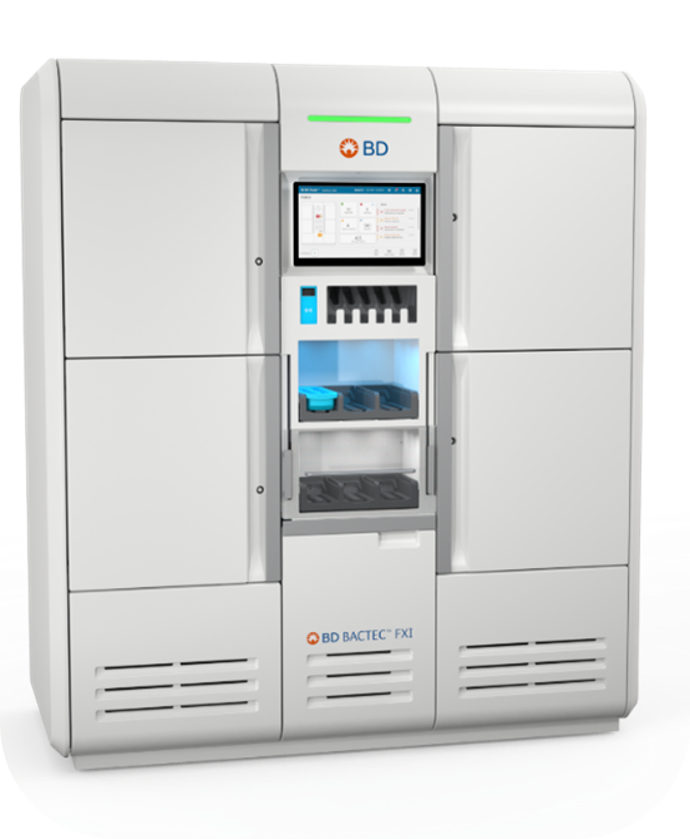
BD BACTEC™ FXI
Culture System
A next generation solution to confront a next-level challenge
Diagnosing patients with suspected sepsis or BSI can feel like a race against time.
With pathogens becoming progressively resistant to available antibiotics,6 the risk of BSI patients
developing sepsis increases, and the opportunity for successful treatment decreases.
After early recognition, timely blood culture and follow-up diagnostics are vital for guiding targeted antimicrobial therapy.7
But the process is rarely that seamless, especially when your time and resources are already overstretched. Inconsistent collection practices can lead to underfilled bottles or contaminated blood cultures, both of which hinder your efforts toward a rapid, reliable diagnosis.8,9
When lives are on the line, how do you simplify the process?


Sepsis Care in Europe and Beyond: Key Findings from a Cross-Sectional Survey.12
A comprehensive survey led by the European Sepsis Alliance has revealed critical insights into the state of sepsis care across Europe and beyond
Conducted between August 2021 and June 2022, the study gathered responses from 1,023 hospitals in 69 countries, examining emergency departments, wards, and ICUs.
The 94-question assessment explored how widely sepsis definitions and Surviving Sepsis Campaign guidelines are applied, the presence of quality improvement initiatives, and the availability of essential resources - from emergency teams and diagnostic imaging to antimicrobial stewardship programs.
The findings underscore significant variability in infrastructure and guideline implementation, highlighting urgent opportunities to strengthen sepsis care globally.12
Claim your free downloadable guide to bringing speed and accuracy to your blood culture pathway.

The Critical Role of
Timely Testing and
Dual Blood Culture Sets
The European Sepsis Care Survey (ESCS) evaluated blood culture diagnostics infrastructure and practices across European hospitals to strengthen sepsis management.11,14
This multicenter, cross-sectional study analyzed procedures for blood culture collection, microbiology service availability, and antibiotic stewardship implementation against international guidelines.
While overall adherence to recommended practices exceeded 80%, critical gaps remain: only 10% of hospitals offer 24/7 microbiology diagnostics, and antibiotic stewardship programs reach just 65%.
The findings underscore the importance of timely microbiological testing and reinforce best practices such as collecting two blood culture sets to improve diagnostic accuracy and guide appropriate therapy.13,14
Are you looking outside of the lab?
Technique is only part of the solution. To get more timely and accurate blood culture results inside the lab, you need to look outside the lab. You need a 360⁰ approach that considers the interdependencies between blood collection, blood culture and reporting.
Adopt a 360⁰ approach for better BSI management
A 360⁰ approach means connecting the right blood culture collection devices, testing tools, data insights, best practices and optimised workflows with an engaged and competent workforce at every phase of the testing pathway.
When you take a 360⁰ approach to BSI diagnostics, you can help remove avoidable errors, variability and process inefficiencies that burden your staff, consume your budget and erode patient care.

Interwoven accountability
Improve execution and increasing accountability along the full diagnostic pathway

Analytics excellence
Access near-real-time visibility and advanced analytics to generate meaningful insights

Cross-functionality
Share insights and aligning functions to drive sustainable improvements
The integrated, 360⁰ BD BSI Solution accompanies you across the full diagnostic pathway

 Boost efficiency, safety and quality
  Reduce costs and complexity
  Translate data into actionable insights
  Expand visibility across the diagnostic pathway
  Evaluate and improve the diagnostic pathway
  Fast, accurate, comprehensive ID/AST results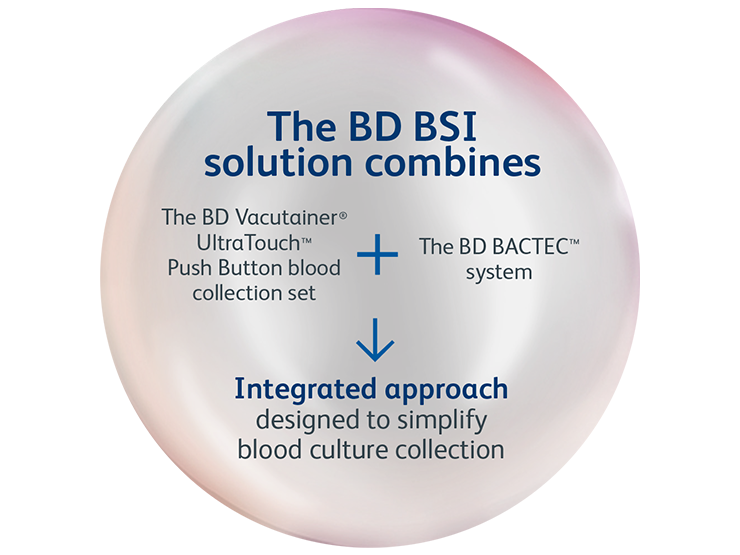
The design of the BD Vacutainer® UltraTouch™ Push Button Blood Collection Set offers a single-handed, in-vein safety activation that instantly retracts the needle at the push of a button, reducing accidental needlesticks by 64%-88% as compared to manual safety wingsets.12,13
When combined with the distinctive safety neck design of BD BACTEC™ Blood Culture Bottles, you eliminate the need for a separate adapter to draw blood into both blood culture bottles and blood collection tubes. This reduces risk that the device is used without an adapter, exposing the needle which could increase the risk of a needlestick injury.
What’s more, you may not only streamline and improve the blood culture collection process, but also enable near-patient incubation with the satellite capabilities of the BD BACTEC™ FX40 Instrument.

By leveraging BD Professional Services with insights generated from BD Synapsys™ Informatics, you may enhance efforts in lowering costs and complexity, while creating the potential to improve patient experience and outcomes across your health system.14 Partnering with BD, you can assess critical steps in the BSI diagnostic pathway and receive customised guidance to improve potential gaps, from collection to final results.
Ultimately, by removing unnecessary complexity from the collection process and equipping your staff with tools designed to work better and safer together, you have the potential to improve blood fill volumes and reduce turnaround time to support better patient experience and outcomes.

With the combination of BD Synapsys™ Informatics and BD BACTEC™ FX Blood Culture System, you have the potential to remove blind spots across the BSI diagnostic pathway.15
In addition, you can automate the process of translating data from multiple instruments and/or locations into actionable insights that can support day-to-day management and strategic planning decisions.
For example, you can:
- Analyse which hours of each day are busiest to identify and relieve staffing bottlenecks.
- Make the process of documentation for accreditation faster and easier.
The BD BACTEC™ Blood Culture System, powered by BD Synapsys™ Informatics, delivers the real-time data insights you need to improve laboratory efficiencies and enhance lab operations.

As an added advantage, you’ll be able to connect the dots between what is happening both outside and inside of the lab.
You can’t fix a problem that you can’t see. But with BD Synapsys™ Informatics, you will have this information at your fingertips and can use it to inform targeted improvements.
By capturing and consolidating data from across lab locations and from different collectors, you can uncover the hidden sources of inconsistencies, inaccuracies and inefficiencies along the BSI diagnostic pathway, all in a secure manner that helps you protect against cyberattacks.16

As part of BD Professional Services, the clinical and workflow specialists can help evaluate your BSI diagnostic process through a broader lens. You will receive an objective assessment of practices, workflows and utilisation of both consumables and instrumentation across all steps of the diagnostic pathway.
You’ll be able to focus on critical key performance indicators, including:
- Blood volume
- Contamination rate
- Turnaround time
- Productivity
You’ll also get recommendations on where and how you can make the most significant improvements-supported by the advanced analytics of the BD Synapsys™ Informatics Solution.
BD offers you diagnostic and process expertise combined with rich insights, enabling sustainable improvements both inside and outside of the lab.

The BD identification and susceptibility testing (ID/AST) systems are designed for speed and coverage, enabling you to expedite results for critical cases and support the appropriate use of antimicrobial therapy to treat BSIs.
Perform your rapid cleanup of positive blood culture with the MBT Sepsityper® CE-IVD Kit for ID preparation.
Comprehensively identify organisms with the help of the robust library and reliable performance of the benchtop-style BD™ Bruker MALDI Biotyper® Sirius System, which yields results from colony or direct from positive blood culture.
Provide clinicians with timely and accurate susceptibility results which leverage updated breakpoint guidelines and routine carbapenemase-producing organism (CPO) detection with the trusted performance of the BD Phoenix™ M50 System.
Streamline your BSI diagnostic pathway
The 360⁰ approach is designed to be tailored to your pathway, meeting you where you’re at.
Ready to learn more ?
Access your BSI resources
Click below to find a list of resources on how to improve your BSI diagnostics and blood culture pathways. Gain full access to customer testimonials, scientific resources, and tools to be deployed in the wards and help improve best practices.
Fill out the form below to get more information on blood collection, blood culture laboratory testing, results reporting and how to improve your practices

