
Making a difference in Obstetrics
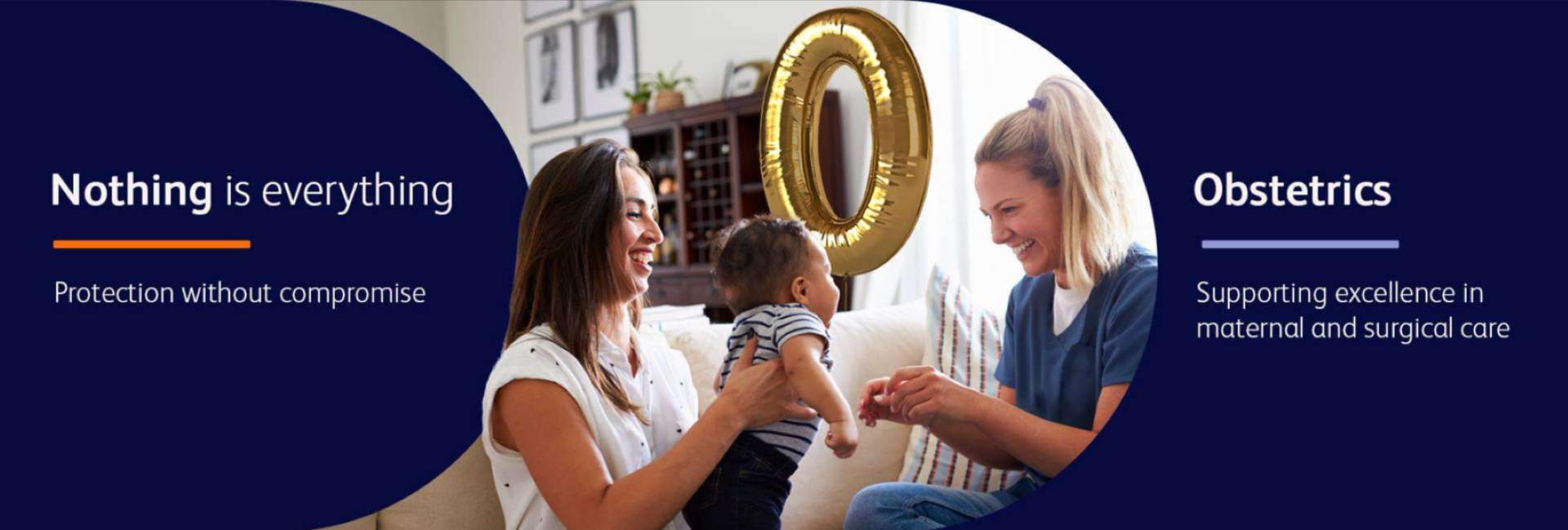
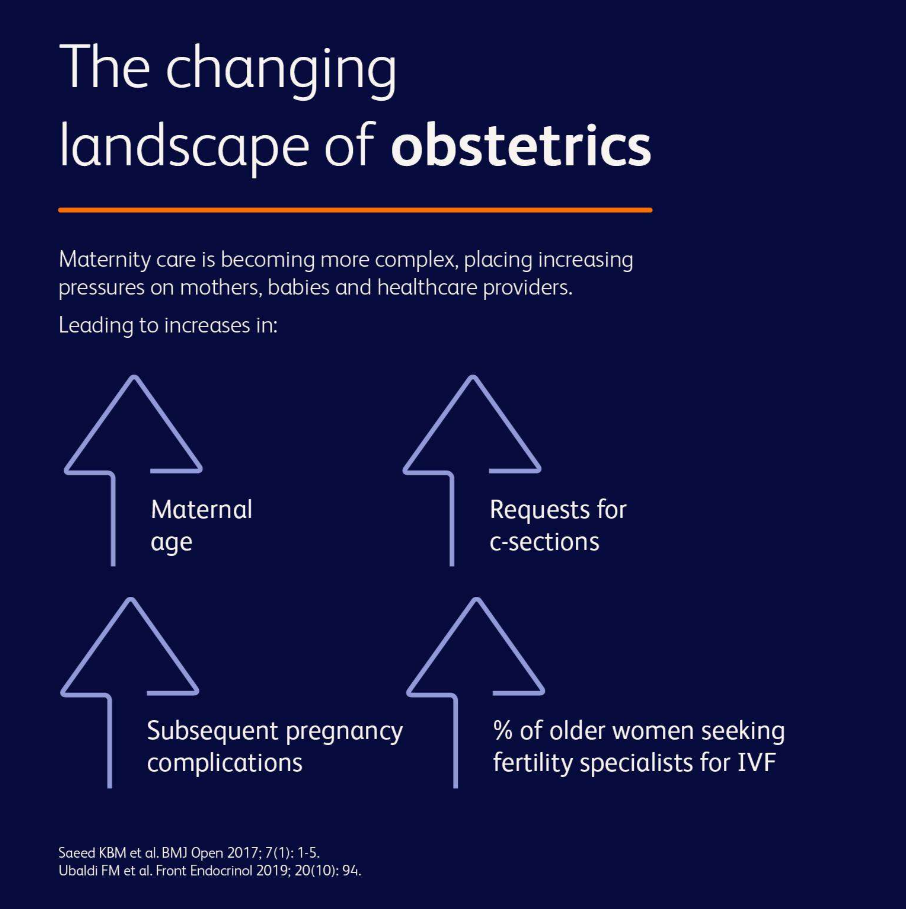
Maternity teams are facing more challenges than ever, making the safe delivery of every baby increasingly complex.
That's why preventing avoidable complications is so important. It's one of the most effective ways to make care safer for mothers and babies, while giving maternity teams the confidence and support they need to deliver their best care.
Reducing surgical site infections is about much more than preventing infection. It's about helping mothers recover well and focus on what matters most—their baby. It's about creating a better experience for patients, supporting healthcare professionals under growing pressure, and helping healthcare systems make the most of limited resources.
The changing face of maternity care:
Maternity services are under growing pressure, with challenges that impact both healthcare teams and resources.
Today, caesarean sections are one of the most common surgical procedures in the UK, with around 250,000 performed every year1
As the number of procedures continues to grow, preventing infection has never been more important. Small improvements in infection prevention can make a big difference for mothers, babies and maternity services alike.
Nothing is everything
No mother should face a preventable infection.
Yet C-sections carry up to a 10x higher risk of infection2, with SSI rates reported at 9.6%3 with a baseline reaching 18% in some UK maternity units1.
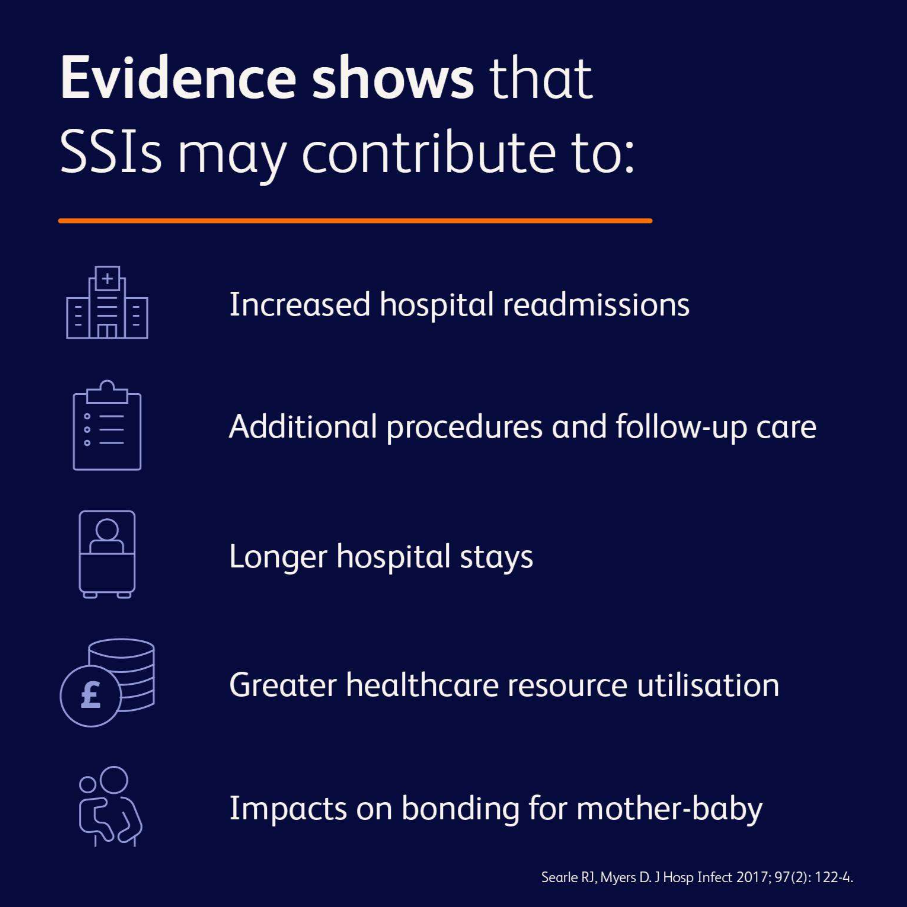
One SSI affects more than a mother. It impacts babies, families, maternity teams, hospital wards, community services, and NHS resources.
Because every SSI impacts more than just one patient.
Here is Sarah’s story.
Sarah’s pregnancy was healthy. Her caesarean section was routine. Her baby was healthy.
The expectation was simple: a normal recovery and discharged home within 24–48 hours. But just a few days later, Sarah began experiencing increasing wound pain, redness and discharge from her surgical site.
Sarah’s recovery journey changed and the ripple effect of impact had begun.
For Sarah, the impact was personal. She was faced with pain, difficulty caring for her newborn baby, anxiety and distress about her recovery.
For healthcare systems, the impact spread beyond the maternity ward, additional appointments and community support was needed, antibiotic treatment and hospital readmission for further treatment increasing pressures on acute services.
This ripple effect causes avoidable burden across already stretched healthcare resources.
Evidence based care bundles can make a difference.
Implementation of multiple evidence-based peri-operative interventions has been shown to substantially reduce the incidence of SSI following caesarean delivery.4
Speak to our team to discover further insights, evidence-based resources and quality improvement approaches designed to support you.
Partnering with you to deliver safer care, improved outcomes for patients and healthcare systems and meet national expectations.
From pre-operative preparation through to post-operative care, evidence-based infection prevention practices play a critical role6 in supporting mothers, babies and healthcare teams.
BD is your partner in infection prevention supporting healthcare professionals standardise best practice and reduce unwarranted variation to support safer surgical outcomes through quality improvement programs.
✔️ Evidence based solutions
✔️ Standardisation as a start to reduce unwarranted variation in protocols
✔️ Multi-disciplinary training and support continuous for quality improvement
✔️ A partner to support you deliver high quality and consistent care for mothers and babies
Let's have a conversation

