

Diagnostic Advances Tackling TB

South Africa currently falls within the 30 high burden country list for TB, TB/HIV and DRTB and has more than 80% Rifampicin Resistance.10 However, between 2015 and 2022, the country achieved more than a 50% reduction in the incidence of TB due to:
- Scaling up of HIV anti-retroviral programs
- Access to rapid diagnostics
The South Africa TB Diagnostic Network
The National Health Laboratory Service (NHLS) of South Africa is responsible for the diagnosis of more than 94% of TB cases. The service comprises an extensive country-wide network of 217 laboratories, which support a range of TB diagnostics from microscopy to advanced phenotypic drug susceptibility.


Diagnostic algorithm takes into account diagnostic diversification
Diagnostic diversification is ongoing, with the inclusion of several new diagnostic systems from various manufacturers. This diversification includes the addition of BD MAX™ to the 74 medium- volume laboratories within the network. The BD MAX™ will be used for testing pulmonary TB, as the BD MAX™ MDR-TB assay has high sensitivity and specificity for detection of MTB and RIF and INH drug resistance.11
The different diagnostic tools employed across the NHLS network have different features, such as turn-around times, the ease of use and operational requirements.
In-laboratory DR-TB Reflex testing algorithm updated
Earlier diagnostic tools used in South Africa were limited to detecting RIF resistance only. Now, with the introduction of the BD MAX™ MDR-TB assay, detection and reporting of RIF and INH resistance is also possible.
Consequently, the South African National TB Diagnostic algorithm has been adapted by 74 laboratories, in line with WHO DRTB guidelines.9 These results are then used to support clinicians to make decisions on referral, treatment and further testing.
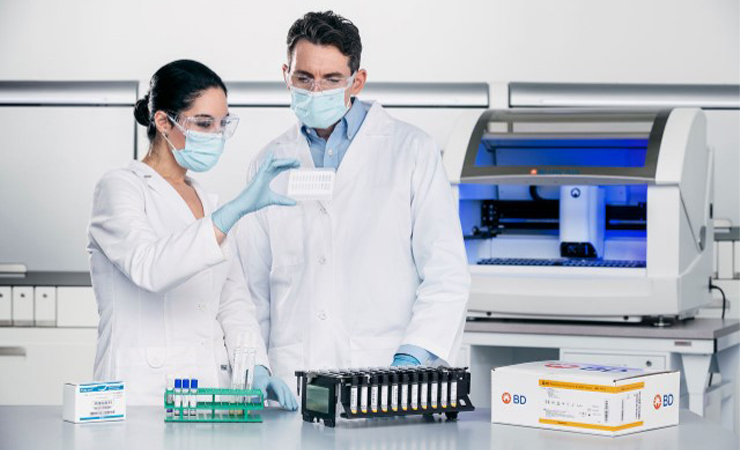

Advances on diagnostics of tuberculosis and management
Dr. Harald Hoffmann
Learning objectives:
- Diagnostic methods for tuberculosis (TB)
- Role of Drug Susceptibility Testing (DST)
- Rational Use of Anti-TB Drugs Based on DST Results
- Advancements in TB Diagnostics and Future Considerations
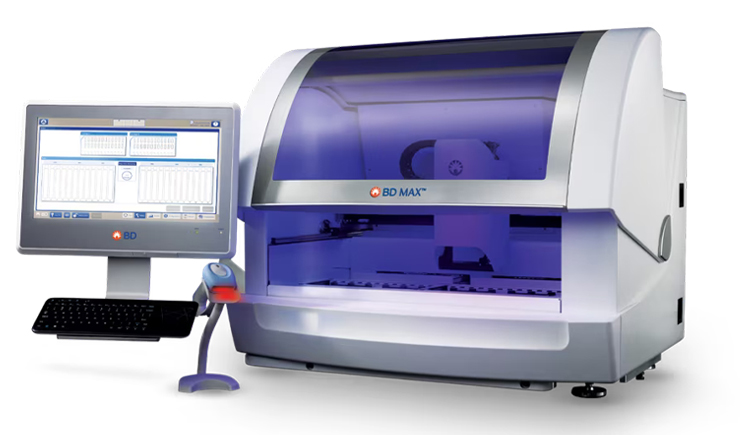
Rapidly detect MTB and multidrug-resistant tuberculosis (MDR-TB) with BD MAX™ MDR-TB
PCR can accelerate TB detection and is specifically recommended by WHO for pulmonary TB testing.

